Why Great Brands Stop Talking About Their Products
For decades, brand communication was built around product visibility and differentiation. Brands focused on explaining what their products were, what they did, and why they were superior.
Yet in a market where functional differences are increasingly limited and communication channels are saturated, product explanation alone is no longer enough to capture attention. This is where brand storytelling changes the rules.

The Limits of Product-Centred Communication
Today, most products within the same category offer comparable quality, performance and price. As a result, features have become easy to copy and hard to remember.
At the same time, consumers face a constant flow of brand messages across every channel. Therefore, a brand that only talks about its product risks sounding like every other brand.
Acqua di Parma: Brand Storytelling Through a Cultural Universe
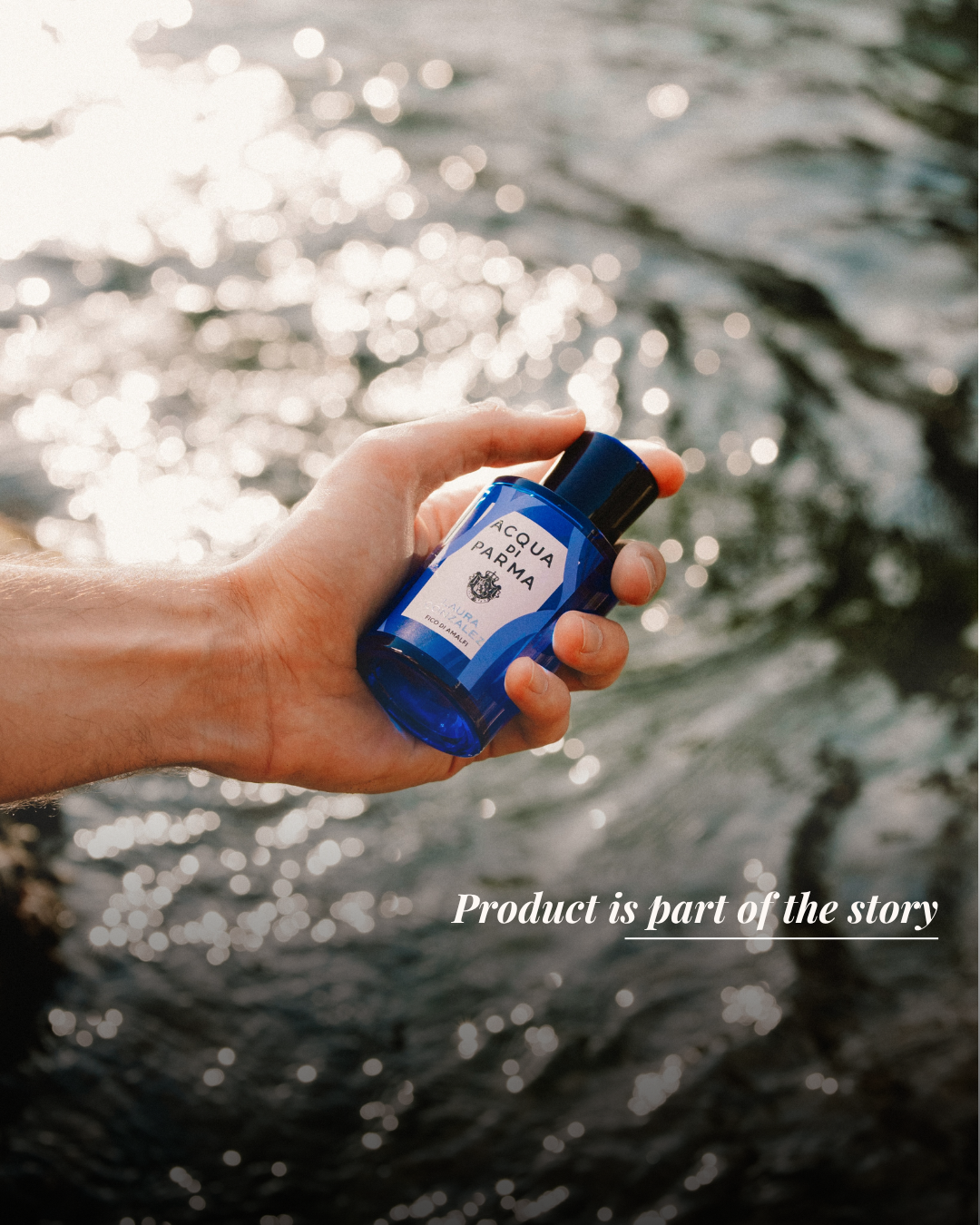
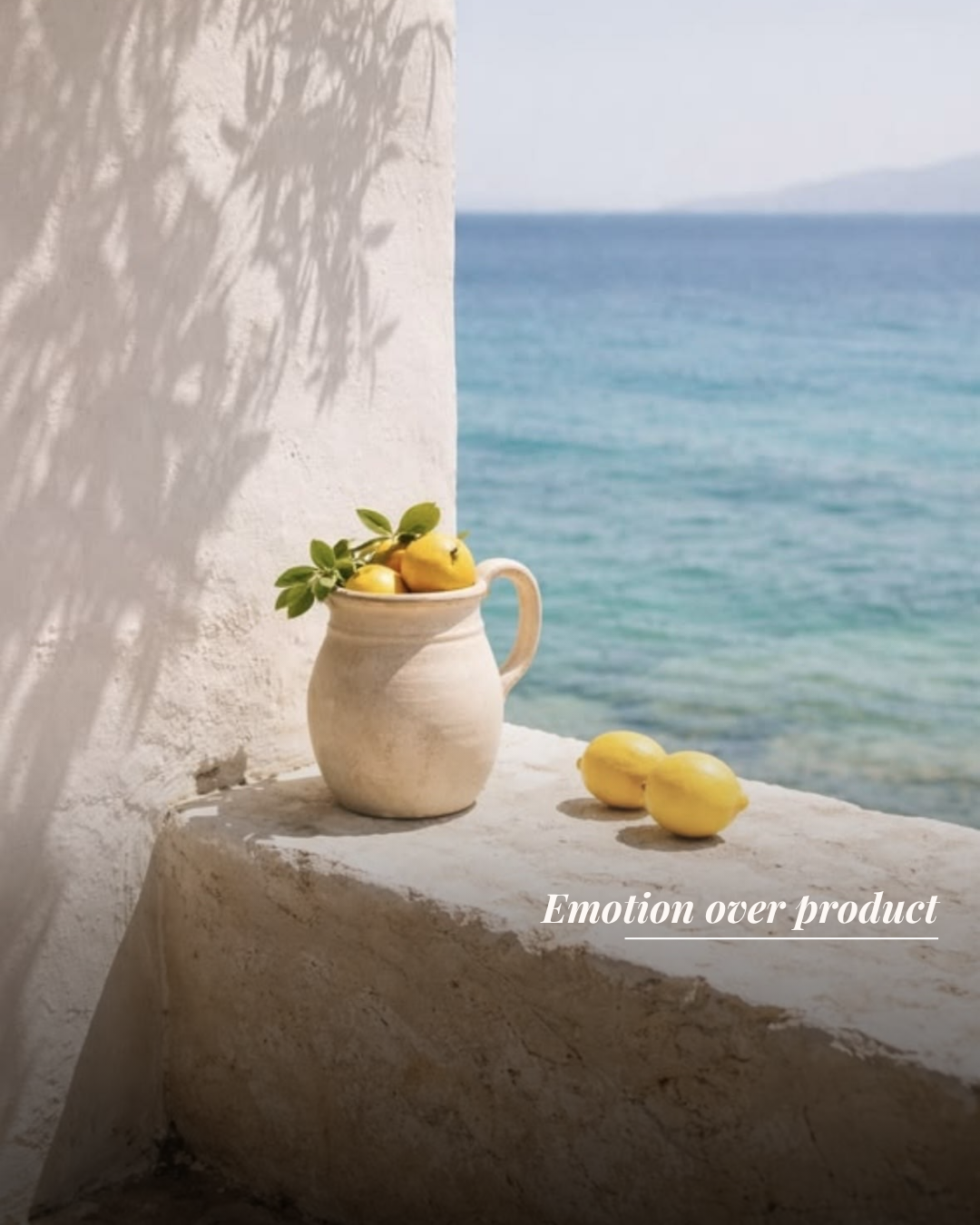
Take Acqua di Parma. Its communication rarely relies on product attributes as the primary driver of desirability. Instead, it consistently builds a distinctive cultural universe shaped by Italian light, Mediterranean landscapes, sensory rituals, and a certain rhythm of life. The product remains present, but it is no longer self-sufficient. Its meaning is derived from the world in which it exists.


From Product to Emotional Experience
This reflects a broader shift in how brands create value today. Consumers do not engage with products in isolation; they engage with emotions, stories, and identities.
By creating a coherent context around its products, Acqua di Parma transforms fragrance from a functional object into a cultural and emotional experience. In other words, effective brand storytelling does not describe the product. It gives it meaning.
Why Desirability Comes From Context
The strongest brands understand that desirability is not generated by features alone. They create environments in which consumers can project themselves, imagining not only what they might buy, but also the lifestyle, values, and aspirations associated with it. In this approach, products become part of a larger narrative rather than the sole focus of communication.
This is even more true for international brands entering new markets such as China. A coherent universe travels across cultures far better than a list of features.



A Structural Shift, Not an Aesthetic One
The shift is not merely aesthetic. It is structural. The most effective brands today are not optimising product communication; they are designing the context in which products become desirable. Ultimately, brand storytelling is no longer a creative option. It is a strategic foundation.